developer recruitment agency and headhunters
your next developer, headhunted by a specialist in your stack.
We combine our data, our tech experts and our AI algorithms to hand your role to the headhunter with the most hires for that profile, from your first developer to your tech lead.
- no setup fees, pay on hire
- guaranteed replacement
- hire signed in under 26 days
they hire their developers with muzzo
how do you hire a developer through a recruitment agency?

Full stack, backend, mobile or tech lead: your developer is hired on the stack and level you set. Muzzo gives the role to the headhunters who place the most people on that technology, and they check shipped code, not a keyword list. Fee of 20 to 30%, paid on hire. Leaves within 3 months: we restart the search free.
how it works
you only pay if you hire
01
you describe the role
Using the form above: the role, your company, your sector. The rest is scoped in your first conversation with the Muzzo team.

02
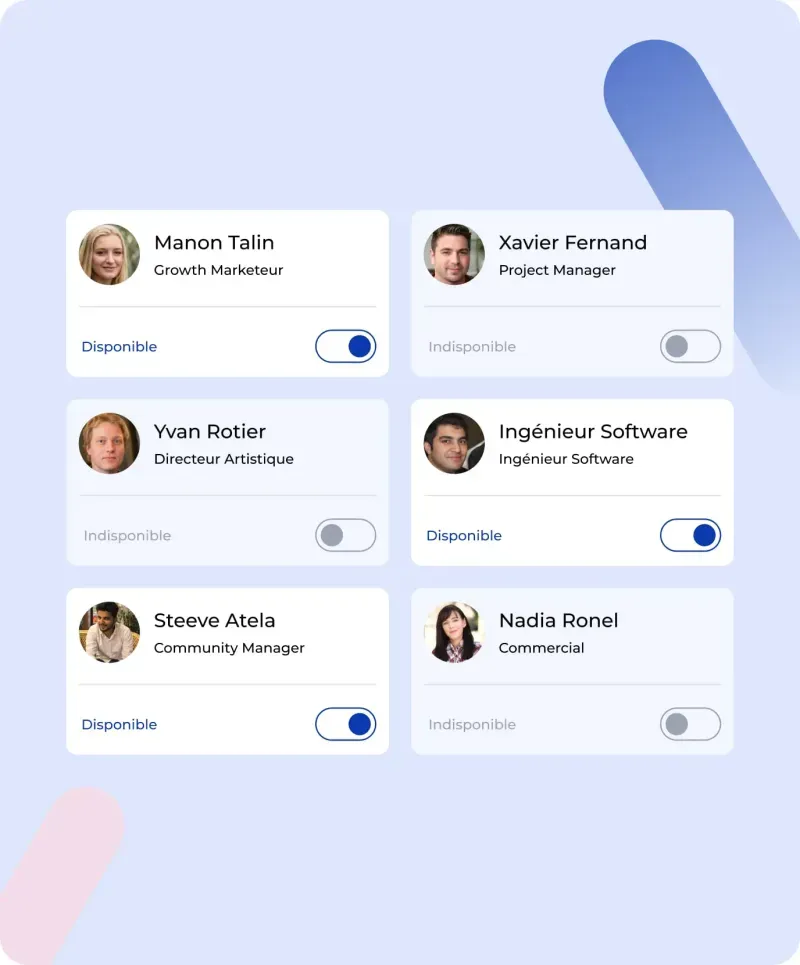
the right headhunters get started
Those who have already recruited developers on your stack and at your level.
03
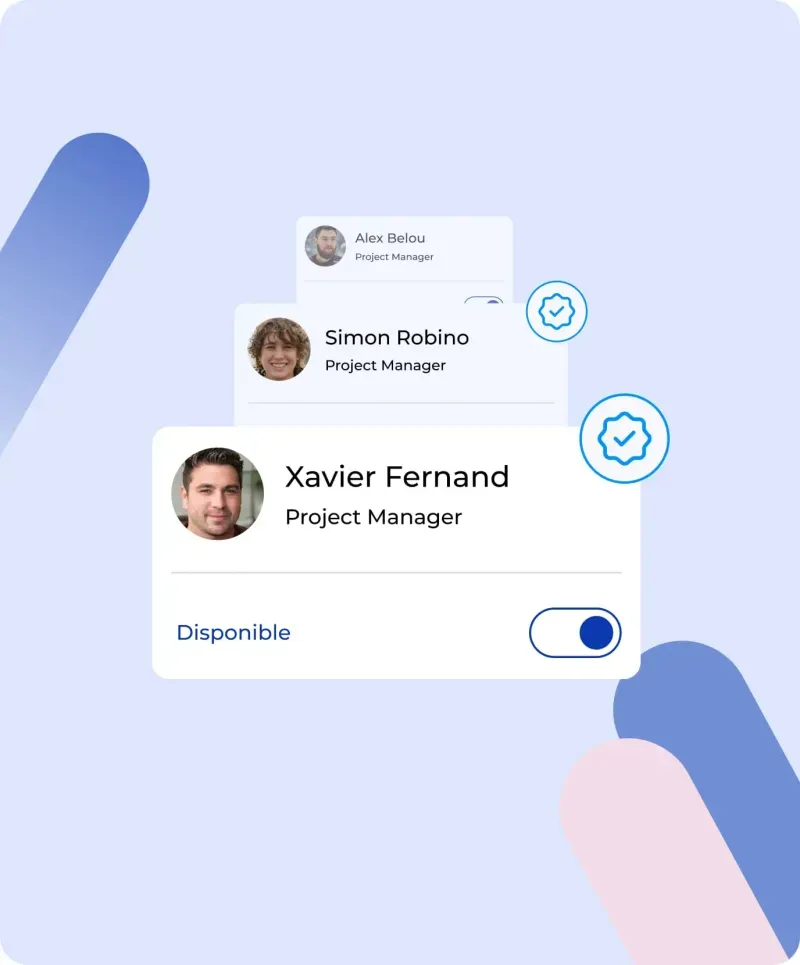
you meet the profiles
Approached and technically assessed by the headhunter. You choose who you meet.

04
you hire, then you pay
Not before. If your new hire leaves within 3 months, we restart the search at no cost.
they hired with muzzo
Muzzo's strength is the diversity of its recruiters: there is always someone listening to our needs.

With Muzzo, I get the reactivity of a marketplace and the quality of a search firm.


let's talk about your role
Antoine and the Muzzo team help you scope your role and choose the right headhunters. Describe your role in the form: we'll call you back to discuss it.
Antoine GigomasCEO and co-founder of Muzzo
one last question?
You set the fee for each role, between 20 and 30%, and you only pay it on hire. No deposit, no fixed fees. A junior developer and a tech lead on a rare stack don't take the same search effort: the fee follows that scarcity.
You have a double guarantee. If your new hire leaves within 3 months, for example because the stack or the level of autonomy wasn't what was planned, we restart the search at no cost. If we find no replacement within 4 months, we refund 50% of the fees. On average, 94% of Muzzo hires are still in post after 3 months.
our headhunters who specialise in developer roles are ready to start
A hire signed in under 26 days. You only pay when you hire.
the reality
good developers don't apply, they respond to the right approach
they already get too many messages
An experienced developer is approached every week, often for a role outside their field. They answer the one who understands their stack, their level and what they are looking for.
Go, React Native, Java: three different searches
A Go developer, a mobile developer and a Java tech lead are not found in the same places. Each role goes to the headhunter who already recruits that profile.
the technical test shouldn't be the first filter
A profile who reaches the interview without the right level costs your team half a day. The headhunter checks real experience before introducing anyone to you.
the roles
the developer profiles our headhunters find for you
From a startup's first developer to a scale-up's engineering manager, each role goes to a headhunter who knows that profile.
full stack developer
The full stack developer codes both the interface and the server. Often the first hire in a product team, and one of the roles our headhunters fill most often.
backend developer
The backend developer builds the API, the database and the processing. Go, Python, Java, PHP: we search by programming language, not by keyword.
frontend developer
The frontend developer builds the interface your customers use. React, Vue, Ember: they need to know your framework and your product's design.
mobile developer
The mobile developer ships your iOS and Android apps, native or hybrid. A rare profile that few recruiters know how to assess.
software engineer
In teams that work in English, the software engineer often covers several layers of the product. The headhunter checks both English and technical level.
tech lead and lead developer
The tech lead still codes, but also sets the architecture and reviews the team's code. You need someone who has done it before, not a developer promoted by default.
engineering manager
The engineering manager hires, grows and organises the development team. It is one of the tech roles our headhunters fill most often.
CTO and founding engineer
The CTO or first engineer lays the company's technical foundations. A decisive hire, often made right after a funding round.
the method
one headhunter per technical profile, not a generalist recruiter
A mobile developer and a data engineer aren't hired from the same networks. So the method starts from the stack, not from a generic developer title.
the brief starts from the stack and the level
Language, framework, level of autonomy, expected days on site: these decide the profile far more than the word 'developer'.
a headhunter who specialises in your technology
From more than 2,500 selected headhunters, your role goes to those who place the most people on your stack: full stack, backend, mobile or tech lead.
the code shipped, checked, not a keyword CV
The headhunter checks the projects actually shipped and the stack used in practice. If you have a technical test, it becomes part of the process.
the figures
developer hiring in figures

9,500
planned hires of IT development technicians in 2026 (developers at engineer level are counted separately)1
44.0%
of these hires rated hard to fill, against 43.8% across all jobs1
€44k
median pay for managerial software developers under 35 (€50k across all these managers)2
€55k
median pay for these managers in the Paris region, against €46k elsewhere in France2
hiring developers in 2026: the tightest regions
Muzzo analysed France Travail surveys for these occupations. Here is, region by region, the share of 2026 hiring plans expected to be hard to fill, and the national trend since 2024.
in France, hiring has eased since 2024
According to Muzzo's analysis of France Travail surveys, employers plan 27,458 hires in these occupations in 2026, 36% fewer than in 2024. 53% are expected to be hard to fill, against 68% in 2024.
53%
of plans expected to be hard to fill in France in 2026, against 68% in 2024
−36%
hiring plans between 2024 and 2026
67%
of plans expected to be hard to fill in Normandie, the tightest of the large regions
- hiring plans
- of which hard to fill
- 43,00068%2024
- 57%2025
- 27,00053%2026
Occupations included (France Travail classification, French labels): Techniciens d'étude et de développement en informatique, Ingénieurs et cadres d'étude, recherche et développement en informatique et télécom. Totals recomputed from the open data files, slightly below the published figures.
the regions where hiring developers is hardest
Share of 2026 hiring plans expected to be hard to fill in these occupations, region by region. In orange, the regions where more than 63% of plans are expected to be hard to fill, well above the national average (53%).
| region | plans hard to fill | 2026 plans |
|---|---|---|
| Normandie | 474 | |
| Hauts-de-France | 1,060 | |
| Nouvelle-Aquitaine | 1,444 | |
| Provence-Alpes-Côte d'Azur | 2,125 | |
| Auvergne-Rhône-Alpes | 2,527 | |
| Île-de-France | 12,731 | |
| Grand Est | 979 | |
| Pays de la Loire | 1,610 |
see the 4 other regions
| region | plans hard to fill | 2026 plans |
|---|---|---|
| Bourgogne-Franche-Comté | 295 | |
| Centre-Val de Loire | 437 | |
| Occitanie | 2,500 | |
| Bretagne | 1,176 |
To cite these figures: Muzzo, analysis of hiring developers by region, October 2026, based on France Travail (BMO surveys 2024 to 2026). muzzo.io/en/cabinet-de-recrutement/developpeurs
hiring developers
why use a developer recruitment agency?
Strong developers almost all have a job. They get messages from recruiters every week and only reply to projects that speak to them: a specific stack, an interesting technical problem, real autonomy.
A developer recruitment agency knows how to present that project in the right words, and checks what a profile has actually shipped, not just the technologies listed on their CV.

Full stack, backend, frontend, mobile: each specialty has its own communities and events. Level matters as much as stack, a junior developer and a tech lead aren't hired in the same place, or at the same salary.
State in the brief what is non-negotiable (language, framework) and what can be learnt. A strong developer switches stack more easily than they switch level of responsibility.

Many companies hiring a developer don't yet have a technical team to judge a profile. The headhunter checks the projects shipped, the stack actually used and the level of autonomy, and explains clearly what they checked.
If you have a technical test, it slots into your existing process. If not, the headhunter can arrange a technical interview with an independent expert before introducing the profile.
Many digital companies, IT services firms and consultancies apply France's Syntec collective agreement, IDCC 1486 (covering technical consultancies and engineering firms), which sets classifications and minimum salaries by grade, as well as rules on probation, notice and flat-rate day contracts.
These figures are a floor, not a market benchmark: the headhunter compares your offer with what is actually paid for the stack and level you're looking for.

Yes, it's common. After a funding round, several roles open at once: full stack, backend, mobile, sometimes a first tech lead. Each role goes to the headhunter who places the most people on that specific stack, and the searches move forward in parallel.
You follow every search in one place, without managing several vendors. It's also the moment to clarify who will manage the team, and from when that role needs to exist.
your questions about hiring developers
According to France Travail's 2026 BMO survey, 44.0% of the 9,500 planned hires of IT development technicians are rated hard to fill, against 43.8% across all jobs. Difficulty mostly varies with the stack sought and the city targeted.
According to Apec, managerial software developers earn a median of €44k under 35. The median rises to €55k in the Paris region, against €46k elsewhere in France (2025 edition). If your company applies the Syntec agreement, it also sets minimum salaries by grade.
The headhunter checks the projects shipped, the stack actually used and the profile's autonomy, and explains clearly what they checked. If you have a technical test, it slots into the process; if not, an interview with an independent expert can be arranged.
This page covers development roles, from full stack to tech lead. For other technical roles (data, infrastructure, cybersecurity, IT management), see our IT recruitment agency page, which covers the whole sector.
Yes. It's common after a funding round. Each role goes to its own headhunter, full stack, backend, mobile or tech lead, and the searches move forward in parallel. You follow everything in one place.
by Antoine Gigomas, CEO and co-founder of Muzzo ·