film and TV recruitment agency and headhunters
your next hire in the audiovisual industry, in good hands.
We combine our data, our sector experts and our AI algorithms to identify the headhunter most relevant to your role, from production to leadership.
- no setup fees, pay on hire
- guaranteed replacement
- hire signed in under 26 days
they hire with muzzo
how do you hire in film and TV through a recruitment agency?

In film and TV, a CV says little: the projects delivered are what count. Muzzo gives your production management, post-production, editing or sales roles, for a production company, a channel or a platform, to the headhunters who have already filled that job. Fee of 20 to 30%, paid on hire. Leaves within 3 months: we restart the search free.
how it works
you only pay if you hire
01
you describe the role
Using the form above: the role, your company, your sector. The rest is scoped in your first conversation with the Muzzo team.

02
the right headhunters get started
Those who have already hired for this role, from production to leadership.
03
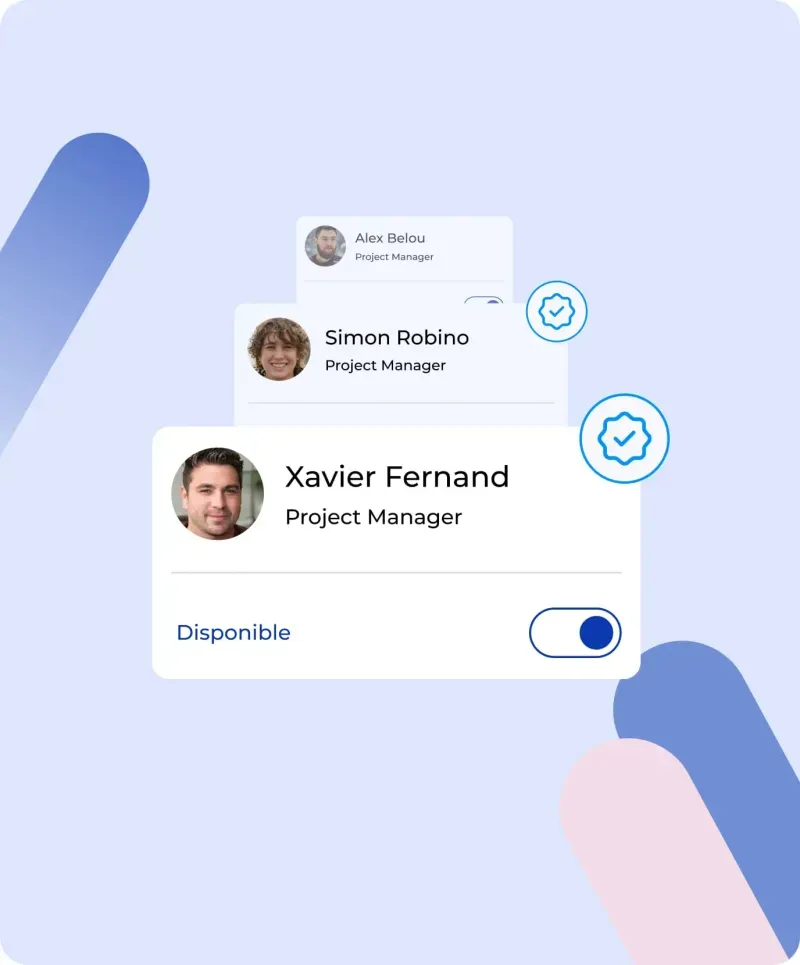
you meet the profiles
Already approached and qualified. You choose who you meet.

04
you hire, then you pay
Not before. If your new hire leaves within 3 months, we restart the search at no cost.
they hired with muzzo
Muzzo's strength is the diversity of its recruiters: there is always someone listening to our needs.

With Muzzo, I get the reactivity of a marketplace and the quality of a search firm.


let's talk about your role
Antoine and the Muzzo team help you scope your role and choose the right headhunters. Describe your role in the form: we'll call you back to discuss it.
Antoine GigomasCEO and co-founder of Muzzo
one last question?
With Muzzo, you set the fee for each role, between 20 and 30%, and you only pay it on hire. No deposit, no fixed fees. An editor and a head of production don't take the same search effort: the fee follows how hard the role is.
You have a double guarantee. If your new hire leaves within 3 months, we restart the search at no cost. If we don't find a replacement within 4 months, we refund 50% of the fees. On average, 94% of new hires are still in post after 3 months.
audiovisual headhunters are ready to start
A hire signed in under 26 days. You only pay when you hire.
the reality
in the audiovisual industry, the best people move from project to project
they are on a shoot, not on job sites
A good head of production moves from one project to the next. They don't read job ads. A headhunter who knows the industry knows where they are working and when they will be free.
producing, broadcasting, selling: three jobs
Producing a show, running a channel, selling ad space: these are not the same networks. At Muzzo, each role goes to the headhunter who knows that job.
technology moves faster than job descriptions
Online distribution, IP control rooms, new platforms: the technical skills required keep changing. The headhunter checks what the profile really masters.
the roles
the audiovisual profiles our headhunters will find for you
From production to broadcast, each role goes to a headhunter who knows that job.

head of production and production manager
They own the budget, the schedule and the crew of a shoot or a show. They are the reason a programme goes out on time.

producer and head of programming
The producer develops projects and sells them to broadcasters. The head of programming builds the schedule of a channel or a platform.

director and editor
The director carries the vision of a programme, the editor gives it its rhythm. Our headhunters look for them for permanent roles, at studios, channels and streaming platforms.

sound engineer and broadcast technician
They keep studios, control rooms and broadcast running. Technical jobs where a mistake shows on air.

post-production manager
They organise editing, grading, mixing and deliveries to broadcasters. A key role for meeting deadlines.

sales and advertising sales manager
They sell airtime, content or rights to advertisers and broadcasters. They are the ones who bring in revenue.

digital project manager and developer
Apps, streaming platforms, internal tools: audiovisual media need solid tech teams.

chief financial officer
The CFO tracks production budgets, financing and rights. A job where knowing the sector matters.
the method
one headhunter per role, not one firm for everything
An editor working a tight broadcast deadline and a head of production committing a budget over several months don't do the same job. Here is what changes when the role is in film and TV.
the brief starts with the project, not the CV
Type of programme, broadcast calendar, post-production tools: these decide the profile long before the job title does.
one headhunter per film and TV role
From more than 2,500 selected headhunters, your role goes to those who place the most people in production, post-production or technical roles.
delivered projects checked before the interview
Budgets kept to, deliveries to broadcasters, tools mastered: the headhunter checks these before introducing a profile.
the figures
film and TV hiring in figures
69,311
private-sector employees in film, video and TV programme production and music publishing, end of June 20261
27,946
private-sector employees in broadcasting (channels, radio), end of June 20261
10.3%
of the 29,030 planned hires of performing arts and entertainment professionals rated hard to fill, a low rate that hides wide gaps by role2
hiring in publishing and broadcasting: the pace of hiring since 2019
Muzzo analysed the hiring declarations published by Urssaf for the “publishing and broadcasting” sector. Here is the number of hires of more than one month declared each year, and the share signed on permanent contracts.
in publishing and broadcasting, permanent hires are picking up in 2025
As shown by Muzzo's analysis of Urssaf data, employers in the sector declared 36,439 permanent hires in 2024, 13% fewer than in 2019. Over the first nine months of 2025, they are up 8% on the same period of 2024.
+8%
permanent hires over the first nine months of 2025, compared with 2024
34%
of hires of more than one month signed on permanent contracts in 2024
−13%
permanent hires between 2019 and 2024
- hires of more than one month
- of which permanent
- 41%2019
- 37%2020
- 35%2021
- 126,00037%2022
- 35%2023
- 106,00034%2024
Hires of more than one month (permanent and fixed-term contracts over one month), raw data, ODbL licence. A declaration counts a contract, not a person.
To cite these figures: Muzzo, analysis of hiring in publishing and broadcasting, October 2026, based on Urssaf (pre-hiring declarations). muzzo.io/en/cabinet-de-recrutement/audiovisuel
hiring in the audiovisual industry

The audiovisual industry combines content, technology and creativity. A production company, a channel or a platform needs skilled creatives and technicians, but also managers and salespeople who know the sector.
Jobs change fast. A production company looking for a director or a sound engineer no longer expects the same skills as before: online distribution, new formats, post-production tools.
A specialist headhunter knows these jobs, the companies where the good people work and the rhythm of projects.
what does the film and TV job market look like, between permanent staff and freelance crew?
read onAccording to a study published in May 2026 by Audiens, the social protection body that receives the sector's payroll declarations, French TV and audiovisual production counted 6,877 companies and 120,779 employees in 2025. Headcount fell by 2% over the year, less than in film production.
Half of audiovisual production companies declare no permanent staff at all: they work with freelance crew under the French intermittent status, project by project. Permanent roles are concentrated in larger companies, notably in post-production. That is where permanent hiring happens: heads of production, post-production, finance, sales.
According to the same study, 59% of audiovisual production companies are based in the Paris region. Production companies are generally covered by the national collective agreement for audiovisual production (IDCC 2642), which also governs freelance crew. A headhunter who knows the sector knows these rules and the salary scales that come with them.

The most sought-after people in the sector move from project to project and rarely answer job ads.
Muzzo hands your role to the headhunters who have already hired for that job. They approach producers, directors, technicians and post-production managers directly, then check their past projects before introducing them to you.
They can also read a career made of successive projects, common in the sector, and spot the people ready to move from freelance work to a permanent role.

You describe the role: the job, the type of programmes, the level. We choose the headhunters who hire the most for that job.
They run the interviews and check the skills specific to the sector: projects delivered, tools mastered, references. You only meet the shortlisted profiles. No endless pile of CVs: a few profiles that match.
You only pay if you hire. No deposit, no fixed fees, and you set the fee yourself, between 20 and 30%.

Directors, editors, sound engineers, production managers and heads of production, but also salespeople, digital project managers and CFOs: professionals who can keep up with a fast-changing audiovisual landscape.
For a head of production, the headhunter looks at budgets kept to and programmes delivered. For a post-production manager, deliveries to broadcasters and the tools mastered. For a salesperson, the broadcasters and advertisers they already know.

A specialist agency saves you time: it runs the search and the interviews, and knows the jobs in the sector.
Muzzo goes further: your role doesn't go to a single recruiter, but to the headhunters with the best results on that exact job. Recruiters who understand the sector, not recruitment salespeople.
A production company hiring a head of production and a finance manager at the same time gives each role to a different headhunter. Both searches move forward in parallel.

According to Urssaf, film, video and TV programme production, along with sound recording and music publishing, employ 69,311 private-sector staff in France, as of the end of June 2026. Broadcasting, channels and radio, employ 27,946 more: two distinct jobs, rarely hired through the same headhunters.
According to France Travail's 2026 BMO survey, performing arts and entertainment professionals, a category that includes film and TV, account for 29,030 planned hires, 10.3% rated hard to fill nationally, a fifth of them in Paris (6,330 hires, 9.8% hard to fill). A low rate on the surface, which hides wide gaps: an experienced sound engineer stays far scarcer than a production assistant role.
your questions about hiring in the audiovisual industry
We find, approach and assess profiles for your roles, from production to leadership. The Muzzo team scopes the role with you, then the headhunters who know that job get to work.
Through direct approach. The headhunters know the production companies, the channels and the technical service providers. They contact people who have already worked on projects close to yours, including those who are not looking for a job.
Our business is permanent roles: permanent contracts and management positions. Freelance crew for a one-off shoot are hired differently. For a head of production or a technical manager joining your team, our headhunters know where to look.
Generally the national collective agreement for audiovisual production (IDCC 2642), which also covers freelance crew. Among other things, it sets minimum salaries by role. Our headhunters take it into account when scoping the role's pay with you.
According to Urssaf, film, video and TV programme production, along with sound recording and music publishing, employs 69,311 private-sector staff as of the end of June 2026, and broadcasting 27,946 more. Two distinct jobs, rarely hired through the same networks.
Overall, less than elsewhere: according to France Travail's 2026 BMO survey, 10.3% of the 29,030 planned hires of performing arts and entertainment professionals are rated hard to fill, against 43.8% across all jobs. But that average hides wide gaps by role and by project.
by Antoine Gigomas, CEO and co-founder of Muzzo ·