infrastructure, cloud and security recruitment agency and headhunters
the people who keep your production running, hired by headhunters who know the field.
We combine our data, our tech experts and our AI algorithms to hand your role to the headhunter with the most hires for that profile, from support technician to cloud architect.
- no setup fees, pay on hire
- guaranteed replacement
- hire signed in under 26 days
they build their infrastructure teams with muzzo
how do you hire an infrastructure or security profile through a recruitment agency?

DevOps, SRE, cloud architect, security engineer, CIO: these roles keep your production running, but are hired from different networks. Muzzo gives your role to headhunters who specialise in each one, and they check an incident or audit actually handled. Fee of 20 to 30%, paid on hire. If your hire leaves within 3 months, we restart the search free.
how it works
you only pay if you hire
01
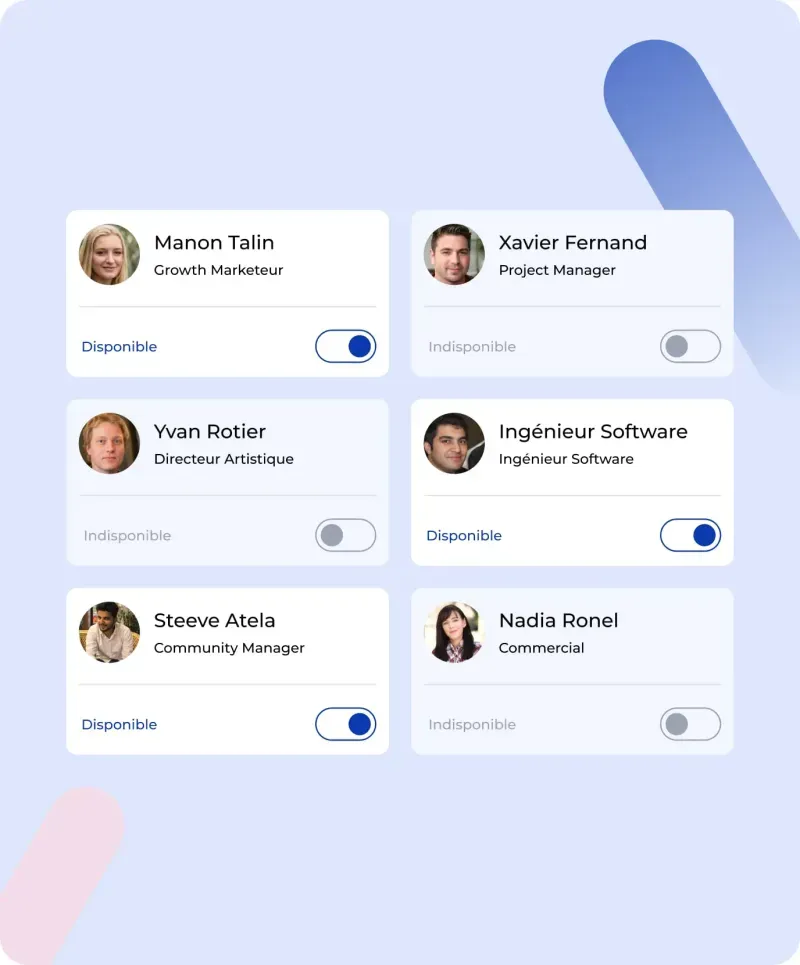
you describe the role
Using the form above: the role, your company, your sector. The rest is scoped in your first conversation with the Muzzo team.

02
the right headhunters get started
Those who have already recruited in your field: DevOps, network, cloud or security.
03
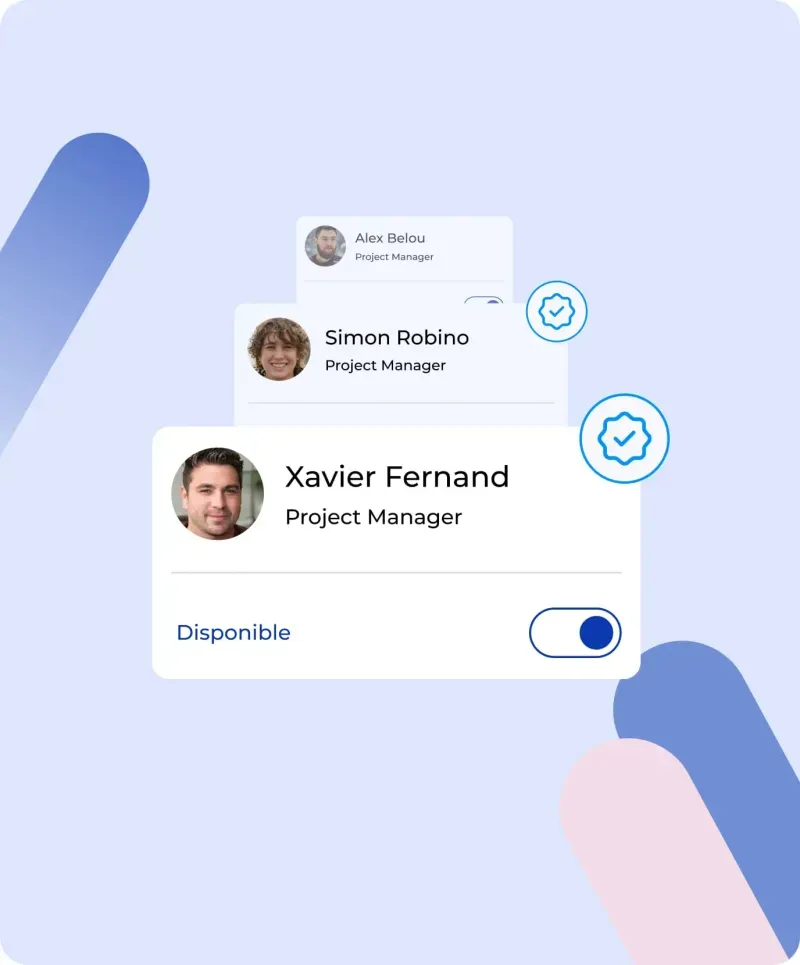
you meet the profiles
Approached and qualified by headhunters who know production. You choose who you meet.

04
you hire, then you pay
Not before. If your new hire leaves within 3 months, we restart the search at no cost.
they hired with muzzo
Muzzo's strength is the diversity of its recruiters: there is always someone listening to our needs.

With Muzzo, I get the reactivity of a marketplace and the quality of a search firm.


let's talk about your role
Antoine and the Muzzo team help you scope your role and choose the right headhunters. Describe your role in the form: we'll call you back to discuss it.
Antoine GigomasCEO and co-founder of Muzzo
one last question?
You set the fee for each role, between 20 and 30%, and you only pay it on hire. No deposit, no fixed fees. A systems administrator and a head of information security don't take the same search effort: the fee follows that scarcity.
You have a double guarantee. If your new hire leaves within 3 months, for example because the on-call duty or the technical scope wasn't what was planned, we restart the search at no cost. If we find no replacement within 4 months, we refund 50% of the fees. On average, 94% of Muzzo hires are still in post after 3 months.
our headhunters who specialise in infrastructure, cloud and security are ready to start
A hire signed in under 26 days. You only pay when you hire.
the reality
the best infrastructure profiles are on call, not job hunting
a DevOps engineer isn't a systems administrator
DevOps, SRE, platform engineer, Linux admin: the titles overlap, the skills don't. The headhunter starts from your actual infrastructure (cloud, on-premise or both) to target the right profile.
security isn't hired on a keyword
A network security engineer, a CISO and a SOC analyst do three different jobs. The headhunter checks what the person has already protected, audited or fixed.
when the key person leaves, you need a replacement fast
Often, only one person knows your servers inside out. If they leave, several headhunters can search at the same time, each in their own network.
the roles
the infrastructure profiles our headhunters find for you
From workstations to the cloud, from production to security, each role goes to a headhunter who knows that job.
DevOps engineer and SRE
The DevOps engineer automates releases. The SRE keeps the service online. We check the tools actually used: Kubernetes, Terraform, CI/CD.
platform engineer
The platform engineer builds the internal tools your developers use to ship. A role that appears when the tech team grows.
cloud architect
The cloud architect designs your infrastructure on AWS, Azure or GCP, and keeps its cost under control. They must have led a migration before.
systems and network administrator
The systems and network administrator runs the servers, the network and the backups. The backbone of production in many SMEs.
network and telecoms engineer
The network engineer designs and maintains your links, remote sites and telephony. A job where field experience counts more than the title.
security engineer and CISO
The security engineer protects your systems. The CISO sets the rules and prepares the audits. Two roles, two different profiles.
support and workplace technician
The support technician helps the teams and manages workstations. Your employees' first point of contact with IT.
CIO and head of information systems
The CIO runs all of the company's IT: budget, suppliers, team. Often the first IT leadership role.
the method
one headhunter per technical field, not one IT recruiter for everything
A DevOps engineer who automates deployments and a security engineer who runs an audit aren't hired from the same networks. The method starts from that distinction, not from the word 'infrastructure'.
the brief names the role, not just 'technical'
Infrastructure, cloud, network or security: each role calls for different certifications and experience. The brief names the precise role, not a general label.
a headhunter per infrastructure or security speciality
From more than 2,500 selected headhunters, your role goes to those who place the most people in that speciality: DevOps, cloud, networks or cybersecurity.
an incident or audit checked, not a certification alone
The headhunter asks what was handled in production: an incident, a cloud migration, a security audit. A certification isn't enough without a concrete case behind it.
the figures
infrastructure, cloud and security hiring in figures

€60k
median gross annual pay for IT security managers (security engineer, CISO), 80% between €43k and €99k1
€55k
median pay for IT infrastructure and systems managers (systems administrator, infrastructure architect), 80% between €41k and €85k1
40.9%
of the 1,980 planned hires of IT production and operations managers rated hard to fill2
40%
of cybersecurity job ads require a master's-level degree (out of more than 23,000 ads analysed between June 2023 and June 2024)3
- Apec, private-sector managerial pay in 111 job families, 2025 edition, p. 56 (IT security) (opens a new window), 2025 data
- France Travail, BMO 2026 survey, IT and telecom production, operations and maintenance managers (opens a new window), 2026 data
- ANSSI, cybersecurity careers observatory, 4th edition 2025 (opens a new window), 2024 data
hiring infrastructure, cloud and security profiles in 2026: the tightest regions
Muzzo analysed France Travail surveys for these occupations. Here is, region by region, the share of 2026 hiring plans expected to be hard to fill, and the national trend since 2024.
in France, hiring has eased since 2024
According to Muzzo's analysis of France Travail surveys, employers plan 14,307 hires in these occupations in 2026, 47% fewer than in 2024. 46% are expected to be hard to fill, against 59% in 2024.
46%
of plans expected to be hard to fill in France in 2026, against 59% in 2024
−47%
hiring plans between 2024 and 2026
68%
of plans expected to be hard to fill in Hauts-de-France, the tightest of the large regions
- hiring plans
- of which hard to fill
- 27,00059%2024
- 49%2025
- 14,30046%2026
Occupations included (France Travail classification, French labels): Techniciens de production, d'exploitation, d'installation, et de maintenance, support et services aux utilisateurs en informatique, Responsables et cadres de la production, de l'exploitation et de la maintenance informatique et télécom, Experts et consultants en systèmes d'information. Totals recomputed from the open data files, slightly below the published figures.
the regions where hiring infrastructure, cloud and security profiles is hardest
Share of 2026 hiring plans expected to be hard to fill in these occupations, region by region. In orange, the regions where more than 56% of plans are expected to be hard to fill, well above the national average (46%).
| region | plans hard to fill | 2026 plans |
|---|---|---|
| Hauts-de-France | 788 | |
| Bourgogne-Franche-Comté | 129 | |
| Provence-Alpes-Côte d'Azur | 1,035 | |
| Bretagne | 440 | |
| Auvergne-Rhône-Alpes | 1,292 | |
| Nouvelle-Aquitaine | 697 | |
| Pays de la Loire | 728 | |
| Grand Est | 309 |
see the 5 other regions
| region | plans hard to fill | 2026 plans |
|---|---|---|
| Île-de-France | 7,131 | |
| Normandie | 252 | |
| Occitanie | 1,073 | |
| Centre-Val de Loire | 200 | |
| Réunion | 105 |
To cite these figures: Muzzo, analysis of hiring infrastructure, cloud and security profiles by region, October 2026, based on France Travail (BMO surveys 2024 to 2026). muzzo.io/en/cabinet-de-recrutement/infrastructure-cloud-securite
hiring in infrastructure, cloud and cybersecurity

These roles all keep your production running, but call for different skills. DevOps or SRE automates deployments and monitors systems day to day. The cloud architect designs the infrastructure these systems run on. The security engineer protects everything against attacks and flaws.
Blurring these roles in a job ad attracts the wrong profiles. A brief that names the precise role, rather than a general label like 'technical', gets more relevant applications.

Yes. Many infrastructure roles involve on-call duty, sometimes at night or on weekends, to respond to incidents. Others require regular on-site presence, in a data centre or at the client's premises.
State these constraints in the brief from the start: they filter out some profiles before the interview even happens, and the headhunter builds them into the search rather than discovering them later.
According to ANSSI's careers observatory, more than 23,000 cybersecurity job ads were published between June 2023 and June 2024, and 40% of them require a master's-level degree. The field remains mostly private-sector, with 66% of survey respondents working there.
The headhunter checks a concrete case, an audit led, an incident contained, a secure architecture put in place, rather than a list of certifications. ANSSI's SecNumCloud qualification, for cloud offerings that protect sensitive data, can also be a criterion in the brief.

Yes. A CIO or head of information systems oversees all of these roles, infrastructure, security, support, and answers regulatory obligations, such as the EU's NIS 2 directive, which extends cybersecurity obligations to thousands of entities.
This role is hired differently from an individual technical role: the headhunter checks management experience and the ability to arbitrate between teams, not just technical mastery.

A generalist IT agency covers development, data and infrastructure, but sometimes blurs the infrastructure and security specialities. At Muzzo, each role goes to a headhunter who specifically hires for that job.
Doctrine and Qare have hired DevOps profiles with Muzzo. The headhunter adapts their approach depending on whether the company is building its first infrastructure team or structuring one already in place, sometimes alongside public players such as the DGA, which works with ANSSI from Bruz, south of Rennes.
your questions about hiring in infrastructure, cloud and security
Yes. Many infrastructure roles involve on-call duty or regular presence in a data centre. State these constraints in the brief, they filter out some profiles before the interview even happens.
According to Apec, IT security managers earn a median of €60k gross a year, 80% between €43k and €99k. Those in IT infrastructure and systems earn a median of €55k, 80% between €41k and €85k (2025 edition).
Less than average, on paper. According to France Travail's 2026 BMO survey, 40.9% of the 1,980 planned hires of IT production and operations managers are rated hard to fill, against 43.8% across all jobs. That figure mostly covers operations managers: for a specialist cloud or security profile, the headhunter approaches people already in post.
Not always, but it's common. According to ANSSI's careers observatory, 40% of cybersecurity job ads require a master's-level degree, out of more than 23,000 ads analysed between June 2023 and June 2024. According to the same survey, 40% of the professionals questioned first worked in IT and digital.
Yes. A CIO oversees all of infrastructure, security and support, and answers regulatory obligations such as the NIS 2 directive. The headhunter checks management experience, not just technical mastery.
by Antoine Gigomas, CEO and co-founder of Muzzo ·